
.png)

Three Sisters Garden
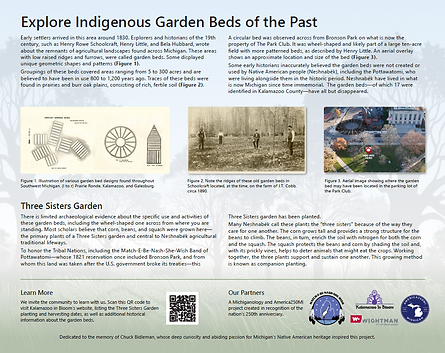
After researching Michigan archives, including surveyor maps and other digital collections, the committee decided to focus the project on planting a Three Sisters Garden that resembled the wheel-shaped bed that was near Bronson Park way back when.
The first planting of corn was on May 23, followed by the planting of squash on May 30. Planting beans took place on July 18. The corn was tall enough for the beans to climb.
Agricultural Practices
The cultivation of corn, beans, and squash is a common indigenous agricultural practice. These plants are called the three sisters because of the way they take care of each other. The corn creates a strong structure for the beans to grow on. The beans enrich the soil with nitrogen for both the corn and the squash. The squash protects the beans and corn by providing shade over the soil and warding off animals that would eat the crops with its thorns. The three plants work together to provide for each other and grow. This technique is called companion planting.
In February 2025, a committee assembled to explore the "ancient" garden beds that were found throughout Southwest Michigan, specifically 17 that were found in Kalamazoo County when the settlers arrived.
According to Wilbert B. Hinsdale's Archaeological Atlas of Michigan, one such ancient garden bed was located where the Park Club stands. It was wheel-shaped and believed to be part of a 10-acre bed.
This project fit right into Michiganology, an effort by the
Michigan History Center to encourage research using overlooked resources that lead to forgotten historical facts. It also aligns with America250MI, part of a broader effort to contribute stories about our nation's past in celebration of America's 250th birthday in 2026.

Three Sisters planting method, Grace Rodgers, U.S. Fish & Wildlife Service
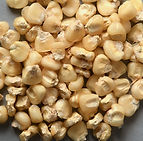
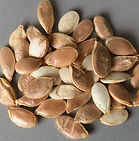
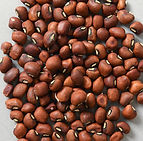
From left to right: Native people's corn kernels, squash seeds, and bean seeds
Much of what is known about the indigenous garden beds was written about by settlers and early historians. These are the resources we used to compile the information on the Three Sisters Garden bed sign in Bronson Park.

Archaeological atlas of Michigan by Wilbert B. Hinsdale. University of Michigan Library Digital Collections, https://name.umdl.umich.edu/1265156.0001.001
-
Page 11 (VII. Garden Beds section)
-
Page 23-24 (shows the bed illustrations and has a little more description)
-
Pages 48 and 55 (key of symbols and map 4 that includes Kalamazoo County)
Memorials of a half-century by Bela Hubbard (1887). New York: G.P. Putnam's sons, https://archive.org/details/memorialsofhalfc00hubb/page/242/mode/2up
-
page 242 Ancient Garden Beds of Michigan

Landscape
Burr oak plains were noted in the above earlier writings. Archaeological evidence in more recent studies
has shown that the physical landscape was changing due to intensive agriculture of corn, beans, and
squash. See pages 10-13 of Evan Peacock’s 1998 “Historical and Applied Perspectives on Prehistoric Land Use in Eastern North America,” http://www.environmentandsociety.org/node/2951.
-
Peacock, Evan. "Historical and Applied Perspectives on Prehistoric Land Use in Eastern North America." Environment and History 4, no. 1 (February 1998): 1–29.
Local Native American History
The Kalamazoo Public Library has several online articles about the history of this area’s Native Americans.
-
Bronson Park Mound, https://www.kpl.gov/local-history/kalamazoo-history/native-americans/bronson-park-mound/
-
Kalamazoo's First Residents, https://www.kpl.gov/local-history/kalamazoo-history/native-americans/kalamazoos-first-residents/
-
Match-E-Be-Nash-She-Wish, https://www.kpl.gov/local-history/kalamazoo-history/native-americans/match-e-be-nash-she-wish/
To learn more about the heritage of the Match-E-Be-Nash-She-Wish Band of Pottawatomi, visit https://gunlaketribe-nsn.gov/about/heritage/
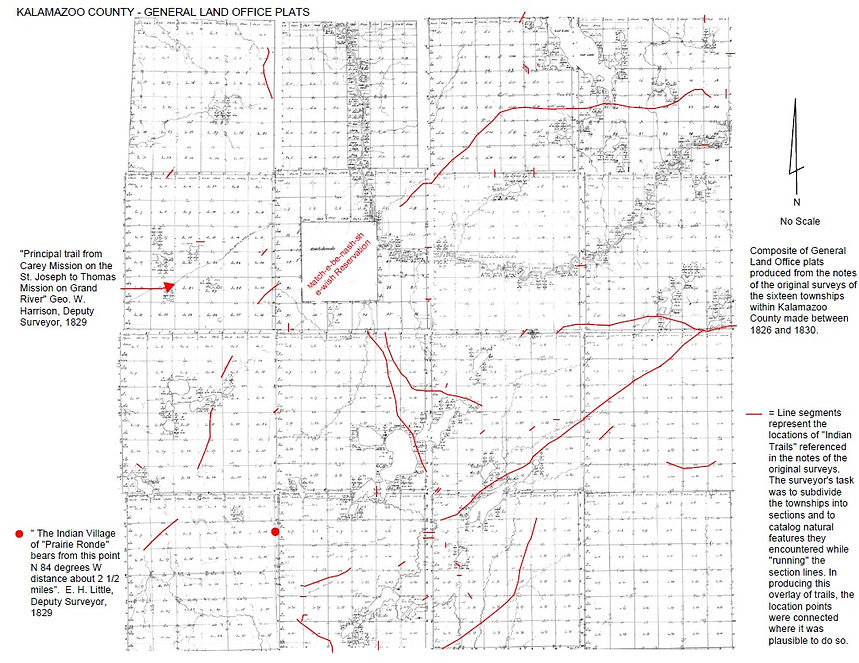
The trails Native Americans used, the locations of reservations, and more were recorded by the state’s land surveyors, like Orange Risdon. We used the General Land Office (GLO) site to search plat maps and survey notes, specifically for Kalamazoo County.
Survey Maps
A small side project was to review the historical surveys of Kalamazoo County and show, on a current map, where the Native American trails were documented at the time. A composite map was created by Gary Hahn, Kalamazoo County Surveyor and committee member. This map shows the Native American trails located during the original surveys of Kalamazoo County.
Garden Bed Committee Members
Chuck Bidleman (deceased)
David Brose
Nancy Calloway
Kate Cook
Fred Edison
Gary Hahn
Rebecca Rupe, Gun Lake Tribe Tribal Historic Preservation Office
Wyatt Szpliet, Gun Lake Tribe Mno Mijem Sovereignty Coordinator
Monika Trahe
